DNA is the molecule that holds the instructions needed to build and maintain every living human being. It acts as a biological blueprint, guiding the development of cells, organs, and the entire body through the genetic information it carries.
This genetic code is stored in a sequence of bases within the DNA molecule, determining traits and influencing how the body functions. Understanding DNA reveals how life is organised at its most fundamental level and how hereditary information passes from one generation to the next.
The complexity of human life is directed by this microscopic structure, making DNA central to fields like medicine, genetics, and anthropology. Exploring its role offers insights into what makes us human and how our bodies operate.
How DNA Encodes the Blueprint of Human Life
DNA contains the essential information required for the development, functioning, and reproduction of living organisms. This information is stored in a precise chemical structure and interpreted through a specific code.
Defining DNA and Genetic Material
DNA, or deoxyribonucleic acid, is the primary genetic material in most living organisms, including humans. It carries the hereditary information passed from one generation to the next.
This molecule is composed of long chains of nucleotides. Each nucleotide consists of three parts: a phosphate group, a sugar called deoxyribose, and one of four nitrogenous bases—adenine, thymine, cytosine, or guanine.
The sequence of these bases forms the genetic instructions necessary for building and maintaining an organism. DNA is found mainly in the cell nucleus, where it is tightly packed and organised into structures called chromosomes.
The Double Helix and Base Pairing
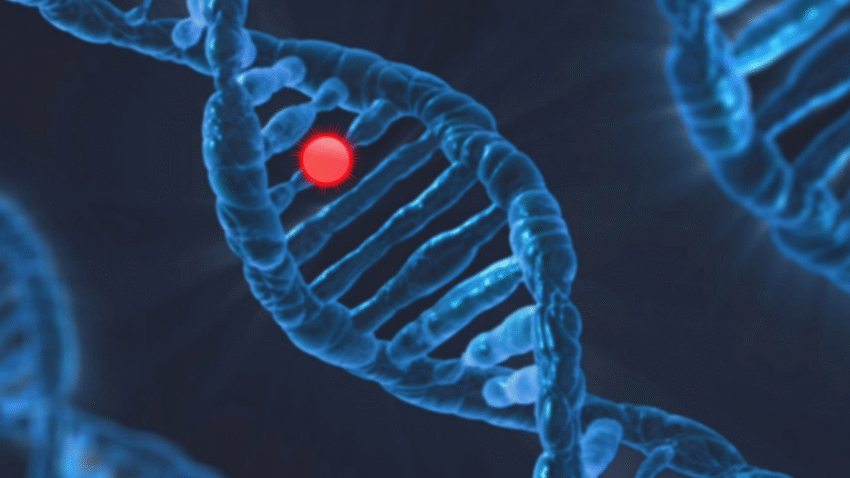
DNA’s structure is a double helix, consisting of two strands twisted around each other. These strands are linked by pairs of nitrogenous bases that follow a strict pairing rule: adenine pairs with thymine, and cytosine pairs with guanine.
The strands run in opposite directions, creating an antiparallel orientation. This pairing is stabilised through hydrogen bonds, which allow the molecule to maintain its shape and integrity.
The sugar and phosphate groups form the backbone of each strand, providing structural support. The double helix enables DNA to replicate precisely, as each base pair with its complement during cell division.
The Genetic Code and Information Storage
The genetic code is the system by which DNA sequences are translated into proteins. This code is composed of triplets of bases called codons. Each codon corresponds to a specific amino acid, the building blocks of proteins.
Proteins determine the structure and function of cells, making the genetic code crucial for regulating biological processes. The order of codons in a gene dictates the amino acid sequence in a protein, influencing its shape and activity.
This code is nearly universal across living organisms, highlighting DNA’s central role in biology. The precise arrangement of nucleotides stores vast amounts of information in a compact molecular form.
Genes and the Expression of Life
DNA contains genes that dictate the traits inherited by each person. These genes operate through processes that convert genetic code into functional molecules. Proteins, created from gene instructions, perform vital roles in cells, while large portions of DNA, once thought useless, now show important regulatory functions.
Genes as Units of Heredity
Genes are specific sequences of DNA located on chromosomes within the genome. Each gene carries instructions for producing molecules that influence physical and biochemical traits. They are the units of heredity passed from parents to offspring, determining characteristics like eye colour or susceptibility to certain diseases.
The genome is made up of thousands of genes arranged in a linear order. Variations or mutations in these genes can alter their function and lead to diverse inherited traits. Thus, genes form the foundation of biological inheritance and human diversity.
Transcription and Translation
The expression of a gene begins with transcription, where the DNA sequence of a gene is copied into messenger RNA (mRNA). This mRNA carries the genetic information from the nucleus to the ribosome in the cytoplasm.
In translation, the ribosome reads the mRNA codons—triplets of nucleotides—and matches them to specific amino acids. These amino acids link together to form a protein chain. This process is essential for converting genetic information into functional proteins.
Proteins and Cellular Functions
Proteins are the building blocks and workhorses of the cell, responsible for structure, enzymes, signalling, and transport. Each protein’s shape and function result directly from the sequence encoded by its corresponding gene.
Proteins participate in nearly every cellular activity. For example, enzymes speed up chemical reactions, while structural proteins maintain cell shape. Without proteins, cells could not survive or perform life-sustaining functions.
Junk DNA and Non-coding Regions
Much of the human genome consists of non-coding DNA, often referred to as “junk DNA”. Although these regions do not code for proteins, many contain regulatory sequences that control gene activity.
Regulatory sequences influence when, where, and how much a gene is expressed. This non-coding DNA plays a critical role in gene regulation, genome stability, and evolution. Recent research shows it is essential for organising the genome and maintaining cellular function.
DNA Replication, Inheritance, and Variation
DNA ensures the transmission of genetic information through precise copying, while inheritance passes traits from parents to offspring. Variation arises from changes in DNA, which drive evolution and natural selection.
DNA Replication Mechanisms
DNA replication is a highly controlled process that duplicates the genome before cell division. It begins at specific sites called origins of replication, where the DNA double helix unwinds.
DNA polymerase is the key enzyme, adding nucleotides complementary to each strand. It works in a 5’ to 3’ direction and proofreads to reduce errors. The leading strand is synthesised continuously, while the lagging strand is made in short Okazaki fragments.
Other enzymes, like helicase and ligase, assist in unwinding DNA and joining fragments, respectively. This semi-conservative mechanism ensures each new DNA molecule contains one original and one new strand.
Genetic Inheritance in Humans
Genetic inheritance occurs through the passing of DNA from parents to offspring via gametes. Humans inherit 23 chromosome pairs, with half from each parent. These chromosomes carry thousands of genes that influence physical and biochemical traits.
Mendelian inheritance explains how dominant and recessive alleles shape traits. Each individual’s genotype and environment together affect the phenotype. DNA replication fidelity in gametes is crucial to maintaining genetic stability across generations.
Sexual reproduction causes mixing of alleles through meiosis, increasing genetic variety. This blending ensures offspring have unique genetic combinations, supporting population adaptation.
Mutations and Genetic Diversity
Mutations are permanent changes in DNA sequence caused by errors in replication, environmental factors, or chemical exposure. They can be neutral, harmful, or occasionally beneficial.
Point mutations, insertions, deletions, and chromosomal rearrangements create genetic variation. This diversity is the basis for natural selection, where advantageous traits become more common in populations over time.
Genetic diversity strengthens species resilience to environmental changes and disease. Without mutation-driven variation, evolution would be severely limited. Thus, mutations contribute fundamentally to the ongoing process of evolution and adaptation.
Applications and Advances in DNA Science
DNA science has transformed many fields by providing detailed insights into genetics and biology. Its applications range from identifying individuals to editing genes and mapping the entire human genome.
Genetic Testing and Forensic Science
Genetic testing detects inherited genetic disorders by analysing specific DNA sequences. It allows the identification of mutations linked to diseases such as cystic fibrosis and Huntington’s disease. This testing supports early diagnosis and tailored treatment plans.
Forensic science uses DNA profiling to match biological samples found at crime scenes to suspects or victims. This technique has revolutionised law enforcement by providing accurate, objective evidence. DNA profiling can also exonerate the wrongly accused and link cold cases to perpetrators.
Both fields rely on advances in sequencing technology and bioinformatics to improve precision and speed. Genetic testing and forensic applications continue to expand into new areas like ancestry determination and population studies.
Biotechnology and Gene Editing
Biotechnology leverages DNA manipulation to develop new products and therapies. Gene editing, especially with CRISPR technology, enables precise alterations to DNA sequences within living cells. This technology has accelerated the development of gene therapy for conditions such as sickle cell anaemia and certain cancers.
Synthetic biology combines genetic modification with engineering principles to create novel biological systems or organisms. This includes microorganisms tailored for drug production or environmental cleanup.
Gene editing raises ethical considerations, especially concerning human applications. Despite this, its potential to cure genetic disorders and improve agricultural output remains a significant scientific focus.
The Human Genome Project and Beyond
The Human Genome Project (HGP) was an international effort completed in 2003 that mapped the entire human genome’s DNA sequence. This achievement laid the foundation for genomic medicine by identifying all human genes and their functions.
Post-HGP advances include large-scale genome sequencing projects and personalised medicine. Researchers now use this data to understand complex diseases like diabetes and cancer better and develop targeted therapies.
New technologies continue to reduce sequencing costs and increase accessibility. This ongoing research drives innovations across genetics, healthcare, and evolutionary biology.