
How to Tell the Difference Between Normal Muscle Soreness and a Serious Injury
We’ve all experienced it, we push ourselves during a workout and a day or two later we can hardly walk down the stairs. We ask ourselves, is this okay? Did I overdo it? The reality is, most of the time, nothing went wrong. But there are times when something went very wrong, and knowing the difference matters more than most people realize.
The Physiology Behind Normal Soreness
DOMS occurs when the muscle is performing an eccentric or a lengthening movement. While the muscle is firing to control this movement, it’s also being forcibly pulled apart. Your body recognizes that it’s not ready for this type of stress, so cellular contents leak out and activate the immune system.
With a true muscle strain, it’s the muscle itself that’s been pulled too hard, usually while it’s trying to contract and shorten against a force. The mechanisms behind the damage and inflammation are a little different, but similar ideas apply: You’ve asked something of the muscle that it couldn’t deliver, and now your body has to come in for the repair work.
Pain Type Tells You A Lot
Regular muscle soreness is typically a low grade, background ache that’s easy to ignore if you’re sufficiently distracted. Why? Because it’s not particularly threatening. A muscle that’s sore and tired but working properly is unlikely to become further damaged or injured. Your body can’t afford to make nerves scream every time you use a muscle that’s been broken by the previous day’s gym session.
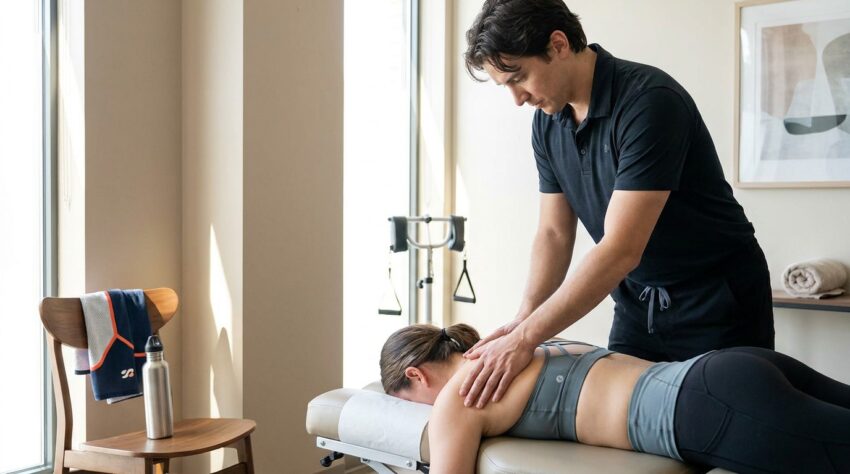
Conversely, muscle or joint pain that inhibits your ability to perform your daily activities, or wakes you up at night, is a different story. Persistent and severe pain is a strong signal from your body that something is wrong and needs to be protected from further stress. If the pain radiates, traveling down a limb or spreading out from a joint, that’s not soreness from a hard workout. One practical rule: if you can’t comfortably compress the area with your hand because the pressure makes the pain spike, that’s a red flag. Consulting a sports injury chiropractor early on can help identify whether that kind of pain points to a specific biomechanical problem worth addressing.
The Symmetry Test
This is a lesser-known indicator. The normal post-workout soreness we experience is generally bilateral, meaning it impacts both sides of the body in proportion to the work performed. After leg day, both quads are sore. After an overhead session, both shoulders ache. After a long run, both calves tighten up. Structural injuries are almost always unilateral. It’s one knee. One ankle. One specific spot on one hamstring. One of the easiest ways to differentiate between ordinary soreness and something more intense is to simply ask whether the pain is focused in one area, and specifically one joint/tendon/muscle belly, on one side of the body. If it is, that’s a warning sign.
Assessing Joint Stability and Function
Yes, having sore muscles can make you feel weak and slow for a bit, but the key to distinguishing normal training soreness from an injury is whether your performance is reduced. Your legs might feel like cement at the beginning of a workout if you crushed legs the day before, but once you’ve moved around for a few minutes and gotten them warm, chances are you’ll be able to do almost as much as you usually would. You might not be able to hop out of an unaccustomed static stretch into a full-effort version of an Olympic lift, but we take it on faith here that you’re smarter than that and wouldn’t try.
Visible swelling and the inability to bear weight are the most obvious signs that something structural has been damaged. If a joint swells up noticeably within the first hour after an incident, that’s the body’s acute injury response, not a workout side effect.
Red Flags That Need Professional Attention
If you’re running through a self-assessment, here are the signs that push past "wait and recover" territory:
Pain that doesn’t improve after 48-72 hours of rest and basic first aid. The standard R.I.C.E. protocol, rest, ice, compression, elevation, handles most acute soft-tissue inflammation well. If swelling isn’t responding to it after two days, something more is going on.
Numbness, tingling, or any radiating sensation that travels down a limb. These point toward nerve compression or joint involvement that muscle soreness simply doesn’t produce.
A specific moment during your activity when you felt or heard something go, a pop, a snap, a sudden sharp sensation that made you stop immediately. That’s an acute injury presentation, not gradual fatigue.
Sprains and strains account for more than 40% of the roughly 8.6 million sports and recreation injury episodes reported annually (CDC National Health Statistics Reports), and a significant portion of those go unaddressed because people assume they’re just sore.
If joint instability, restricted range of motion, or localized pain is still present after a few days, don’t write it off. Getting it looked at can help address any joint misalignment contributing to the issue and support faster soft-tissue recovery through targeted treatment.
Making the Call
Here’s an easy way to tell if you’re feeling typical training-induced aches or if something needs more attention: consider how it behaves in response to movement. Pain and soreness may seem nearly identically annoying while you’re trying to get up from your desk and go to lunch the day after your first barre class. But making your way through your movements will generally free you from typical discomfort. Pain doesn’t care if you’re moving or not.
Most aches are nothing. But treating a real injury like soreness, and grinding through it, is one of the more reliable ways to turn a minor problem into a long-term one. Know the difference, and act accordingly.